Branding for architects often begins with familiar promises: thoughtful design, personal service, and a collaborative process. These qualities matter, and they may accurately describe how your firm works. But when every architecture firm makes the same promises, how does a prospective client decide whom to hire?
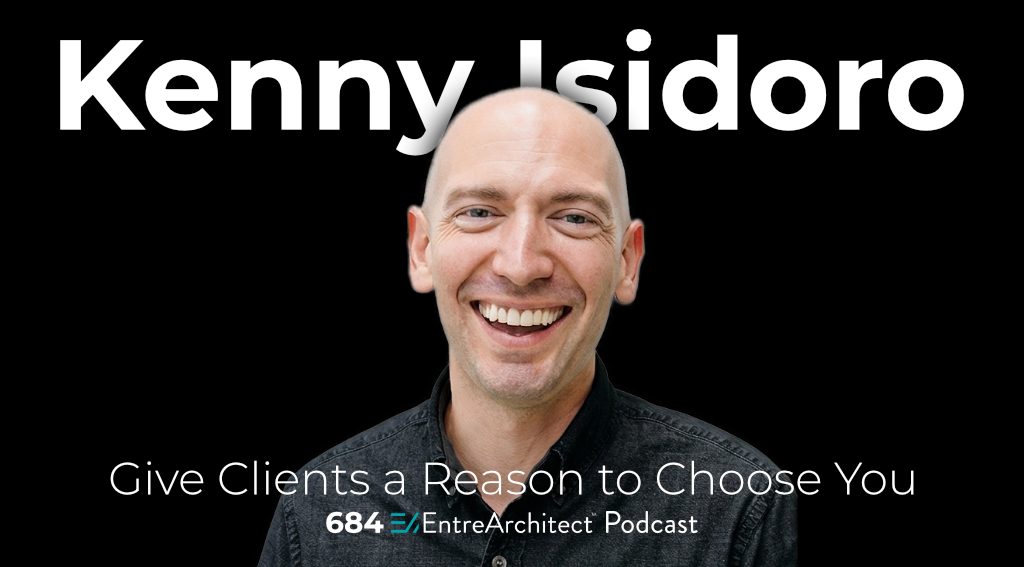
That question sits at the center of my conversation with Kenny Isidoro on this week’s EntreArchitect Podcast. Kenny is the founder of MUDEO, a brand consultancy working with architects, developers, engineers, and builders. With a background in architecture and experience in marketing and brand strategy, he understands the challenge of communicating the value of work that is complex, personal, and difficult to evaluate before someone hires us.
One of his most useful observations is that a firm’s beliefs should give people something to consider, question, and potentially disagree with.
If everything you say about your practice would receive unanimous approval from every other architect, you may have more work to do.
What Does Your Firm Believe?
Most architects can describe their services. We can explain our process, identify our project types, and list the qualifications that make us capable of doing the work.
Explaining what we believe requires a different level of thought.
You might believe that renovating an existing building should always be explored before considering demolition. You might believe that a smaller, carefully planned home serves a family better than a larger home filled with rooms they rarely use. You might believe that clients should invest in understanding their operations before investing in additional space.
Another architect could reasonably approach those decisions differently. That is what makes the conversation useful.
These beliefs reveal how you think. They help a prospective client understand the advice you are likely to give and the priorities that will guide your decisions.
Of course, a belief needs substance. Choosing a provocative position simply to attract attention gives people little reason to trust you. Your point of view should emerge from experience, inform your process, and show up in the work you deliver.
The question is whether you have made that connection clear to anyone outside your firm.
Your Brand Is Your Reputation
Kenny describes brand in a way that makes immediate sense for a small firm architect: your brand is your reputation.
That definition connects branding to the daily work of running a practice. Your reputation develops through the expectations you establish and the experiences people have with you. Your website contributes to it. So do your proposals, your conversations with contractors, and the way your team responds when a project becomes difficult.
Every interaction gives someone information about your firm.
You may think of your practice as organized and responsive. A client waiting several days for an answer may form a different impression. You may believe your greatest strength is guiding clients through complex decisions. If your website shows only finished buildings, a prospective client may never discover that strength.
Building a brand requires paying attention to the relationship between what you believe, what you communicate, and what people experience.
Kenny’s approach begins with evaluating those existing conditions.
Four Questions Worth Asking
Kenny uses four Cs to assess brand effectiveness: clarity, contrast, compelling, and consistency. Together, they offer a practical way to examine how your firm presents itself.
Clarity: Can someone quickly understand what you do, whom you serve, and why your work matters to them? We spend years learning the language of architecture. Our clients usually have other expertise. The words that impress our peers may leave a prospective client uncertain about how we can help.
Contrast: Can someone distinguish your firm from the alternatives? This is where your beliefs become especially useful. If your message could appear on five competitors’ websites without anyone noticing, it probably needs more specificity.
Compelling: Have you given the right person a reason to take the next step? A clear description of your services helps, but clients also need to recognize a connection between your expertise and something they want to accomplish.
Consistency: Does your firm communicate the same priorities across its website, proposals, conversations, and project experience? Kenny describes how years of small adjustments, often made by different people, can gradually weaken that connection.
You do not need to rebuild everything at once. Start by identifying where the greatest gap exists and make a useful improvement there.
Give Clients Something They Can Use
Our conversation also touches on a familiar frustration: the public does not understand the value of an architect.
Kenny asks us to consider our own role in changing that.
If we want people to understand our value, we need to communicate it regularly. Educational content gives us a practical way to do that.
Explain a decision that helped a client avoid an expensive mistake. Describe how an early planning conversation changed the direction of a project. Share the questions someone should ask before purchasing a property or committing to a construction budget.
Those stories make your judgment visible. They help people understand what happens between the first conversation and the finished photograph.
They also create opportunities to express your beliefs through evidence. A project story can show why you recommend a particular approach and what happened when a client followed it.
Over time, people begin to understand how you think and whether they want that thinking applied to their own project.
Start With One Belief
For a small firm owner, branding can feel like another major initiative competing with deadlines, staffing, and cash flow. But you can begin with a focused conversation.
Ask your team: What advice do we consistently give clients? Where do we challenge conventional assumptions? What decisions have produced our best outcomes?
Choose one belief that emerges from those answers. Find a project that demonstrates it. Then explain the connection in language a prospective client can understand.
That is a useful foundation for your next article, project description, or client conversation.
Your firm already has a reputation. The opportunity is to build it with greater intention, around ideas you can explain and promises you can deliver.
Listen to Episode 684 of EntreArchitect Podcast with Kenny Isidoro for our full conversation about branding, reputation, and becoming the firm the right clients want to hire.

Leave a Reply