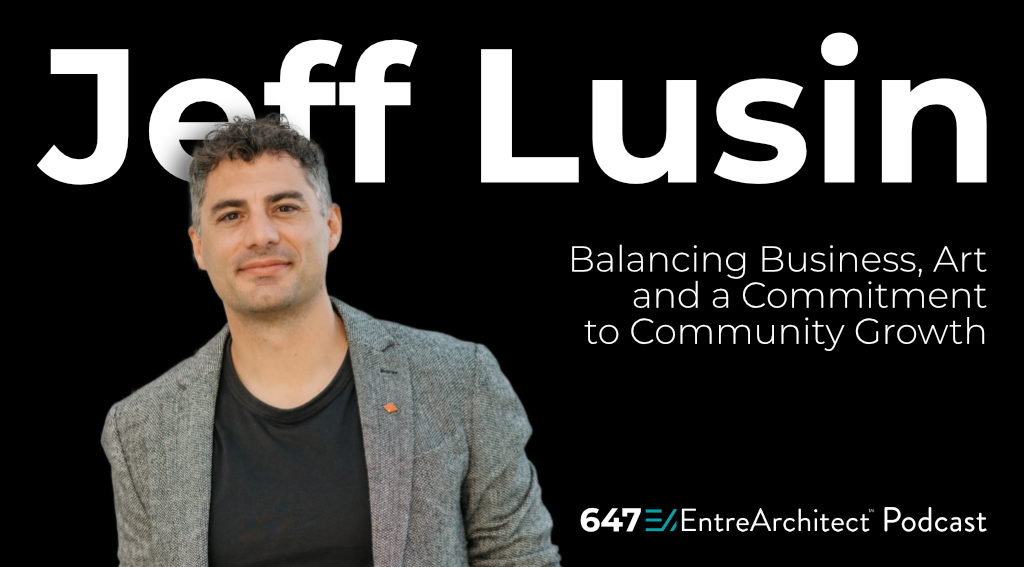
How Jeff Lucine of 45 Architecture balances design excellence, community impact, and sustainable business growth
If you want to build a better firm, you must be intentional.
That was one of my biggest takeaways from my conversation with Jeff Lucine of 45 Architecture in Bozeman, Montana. Jeff is not just an architect. He is a third-generation business owner, an artist, and an entrepreneur who understands that architecture is about more than buildings. It is about people, place, and long-term responsibility.
You can listen to the full conversation at https://entrearchitect.com/647.
What struck me most is how clearly Jeff and his team have chosen their path. They are not chasing growth for growth’s sake. They are building something that reflects their values.
And that is where this conversation becomes important for you.
Stewardship as a Business Strategy
Jeff used the word stewardship when describing his work in Bozeman. That word stayed with me.
Bozeman is growing quickly. Many of you listening live in communities that are changing just as fast. Growth for these communities can either happen by accident or by intention. Jeff and his firm have chosen to participate in shaping that growth.
That is not just a design philosophy. It is a business decision.
When you position your firm as a steward of place, you are telling your community that you care about long-term impact. You are not simply delivering a service. You are guiding transformation.
That creates trust. Trust leads to referrals. Referrals lead to sustainable growth.
Too many firms try to differentiate based on style. Few differentiate based on responsibility. Stewardship is a powerful differentiator.
Craft Still Matters
Jeff grew up watching his grandfather build small wooden toys in a shoe shop. That early exposure to craft shaped his perspective. He also spent years painting. That artistic discipline informs his work today.
Craft is not nostalgia. It is a standard.
In an age where speed dominates, craft stands out.
If your drawings are clear, your presentations are thoughtful, your details are resolved, and your client experience is deliberate, people notice. That level of care communicates competence and pride.
But here is the key. Craft applies to your business as much as it applies to your buildings.
Is your website crafted? Is your onboarding process crafted? Is your proposal process crafted?
Jeff spoke about balancing marketing and delivery. Your marketing cannot outshine your work. But your work cannot stay hidden behind weak communication either.
You must raise both at the same time.
Roles, Responsibility, and Hard Conversations
Jeff and his partner started small. Three partners. Three employees. Everyone did everything.
Most small firms begin this way. The problem is that what works at three people does not work at twenty.
Jeff shared how they eventually implemented the Entrepreneurial Operating System (EOS) and clarified roles and accountability. That structure created space for honest conversations that had been avoided for years.
Here is the lesson. You cannot scale chaos.
You may survive it for a while. You may even grow through it. But eventually, lack of clarity becomes friction. Friction becomes resentment. Resentment becomes burnout.
If you are in the early stages of your firm, define roles now, even if you are only two people.
Who owns marketing? Who owns operations? Who owns finance? Who owns culture?
If the answer is both of us, you likely have work to do.
Clarity is not restrictive. It is freeing.
Growth Is Not About Headcount
One of my favorite parts of the conversation was when I asked Jeff how big he wanted the firm to become.
His answer was not about number of employees. It was about quality of work.
That is a shift many firm owners need to make.
Growth does not automatically mean more people. Growth can mean better clients, better processes, better profitability, and better culture.
Jeff talked about being more selective with clients after years of saying yes to everything. That is maturity. That is intentional growth.
Ask yourself: Are we pursuing more projects or better projects? Are we filling the pipeline or refining the pipeline? Are we chasing revenue or building margin?
Intentional growth requires restraint.
Restraint is difficult when cash flow feels uncertain. But discipline today builds stability tomorrow.
Core Values as a Filter
Jeff described how 45 Architecture refined their core values and now uses them as part of their hiring process.
Core values are not decorative statements for your website. They are filters.
If a potential team member does not align with your values, it does not matter how talented they are. Long-term success requires cultural alignment.
The same applies to clients.
Not every client is your client.
If your firm values collaboration, transparency, and community impact, but you accept clients who prioritize speed and cost above all else, you are setting yourself up for conflict.
You must define who you are before you can attract the right people.
That work takes time. It also requires honesty.
Who do you really want to be as a firm? Not what sounds impressive. Not what other firms are doing. What actually aligns with your beliefs and energy?
Marketing Is Not Optional
Jeff admitted something many architects struggle with. You have to let people know you exist.
Word of mouth is powerful. It is also unpredictable.
If people do not know you do great work, they cannot hire you.
Marketing does not mean bragging. It means communicating value clearly and consistently.
Jeff’s perspective was simple. Deliver exceptional work. Tell people about it. Make sure your message matches your experience.
That alignment builds credibility.
As small firm architects, we often feel uncomfortable promoting ourselves. But if you truly believe in the value of thoughtful design, you have a responsibility to share it.
The communities you serve deserve access to great architects. Silence does not serve them.
Small Moves, Big Results
At the end of our conversation, Jeff offered advice that every small firm owner should write down.
Make small moves. Make them really good.
You do not need a perfect five-year strategic plan to begin.
Improve your website. Refine your portfolio. Clarify your mission. Tighten your proposal process. Have one hard conversation you have been avoiding.
Then repeat.
Business transformation rarely happens in one dramatic leap. It happens through consistent, incremental progress.
The danger is waiting for the perfect moment. The opportunity is acting today.
Protect the Brand, Protect the Culture
Jeff shared one of their internal principles: guard the brand, protect the culture.
As your firm grows, your reputation expands beyond you. Every team member represents your values.
Culture does not happen by accident. It must be nurtured and defended.
If you allow small compromises in behavior or quality, they accumulate. If you ignore tension between partners, it grows. If you avoid accountability, it spreads.
Leadership is stewardship of people as much as place.
What This Means for You
If you are a small firm architect, here is the challenge.
Stop thinking only about projects. Start thinking about the firm you are building.
Are you building a lifestyle practice that supports your family and community? Are you building a regional leader that shapes growth responsibly? Are you building a firm that outlives you?
There is no right answer. But there must be a conscious answer.
Intentional growth is not about size. It is about alignment. Alignment between your values, your work, your marketing, your team, and your clients.
That alignment creates momentum.
Jeff and his team at 45 Architecture are proof that you can build a firm rooted in craft, community, and clarity. It does not require a major metropolitan market. It requires conviction.
If you want to hear the full conversation and dive deeper into Jeff’s story, listen to EA647 at https://entrearchitect.com/647.
Then ask yourself one question.
What small move can you make today that will build a better firm tomorrow?
Leave a Reply