How AAHA Studio is using design leadership to rebuild communities after wildfire
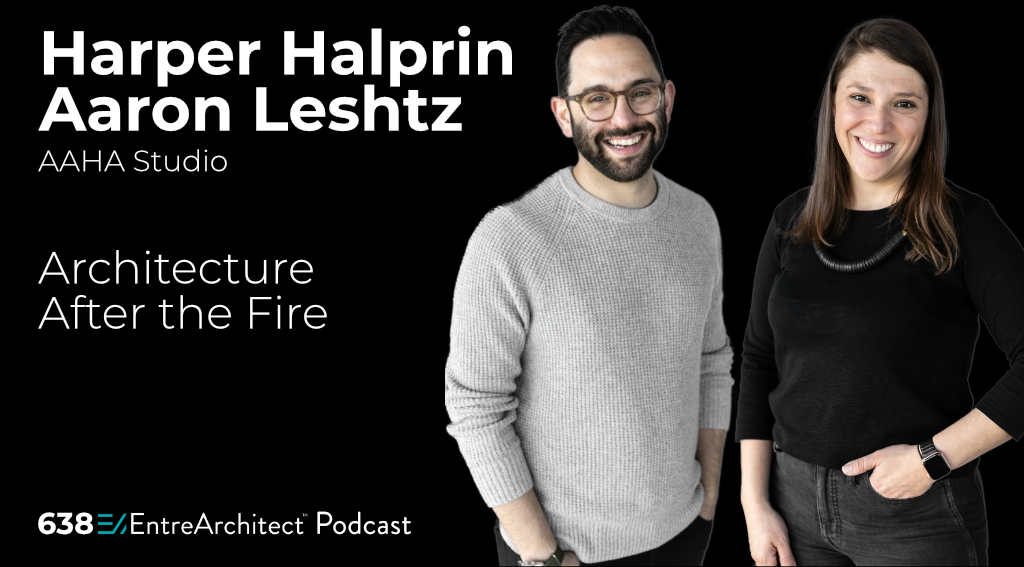
When I sat down with Harper Halprin and Aaron Leshtz of AAHA Studio, I expected a conversation about residential design. What emerged was something far more important. This was a discussion about responsibility, leadership, and the often unseen ways architects serve people when their lives are disrupted.
Their work on Case Study 2.0 is not about chasing an architectural ideal. It is about meeting a moment. In communities devastated by wildfire, architects are being asked to do more than design houses. They are being asked to help people find their footing again.
Revisiting the Spirit of the Original Case Study Program
The original Case Study House Program was launched after World War II to address a housing shortage and to explore new ideas about construction, affordability, and modern living. Architects were challenged to respond to real societal needs with clarity and optimism.
Case Study 2.0 carries that same spirit forward, but the context has changed. Today’s challenges include climate change, wildfire risk, and the reality of rebuilding entire neighborhoods under emotional and logistical strain.
Harper and Aaron explained that this initiative is not about recreating mid-century modernism. It is about asking the same fundamental question. How can architecture respond responsibly to the conditions of its time?
Fire Resilience as a Design Problem
One of the most important takeaways from this conversation is that fire resilience cannot be treated as an add-on. It must be embedded in the design from the very beginning.
AAHA Studio’s prototype is organized around courtyard living, a familiar Southern California typology that does more than blur indoor and outdoor space. It creates defensible space between structures, reducing fire risk while improving livability.
This approach reframes resilience. Design is no longer just about form or efficiency. It becomes an active participant in protecting lives and communities.
Working Within Real Constraints
Every firm participating in Case Study 2.0 worked within defined boundaries. Standardized architectural fees. Target construction costs. Readily available materials.
Rather than limiting creativity, these constraints focused it.
Harper described how rare it is to design without a specific client while still designing for real people. The result is work that is thoughtful, buildable, and responsive without being indulgent.
For small firm architects, this is a powerful reminder. Constraints are not the enemy of good design. They are often the path to it.
Architecture as an Act of Service
Aaron made a point that deserves repetition. Architecture is a vessel for customer service.
In the months following the fires, AAHA Studio was not just producing drawings. They were helping clients navigate insurance questions, city approvals, and emotional trauma. Much of that work will never appear in a portfolio.
Yet it is often the work that matters most to clients.
This is where small firms excel. Not by scaling volume, but by deepening relationships and showing up when the process becomes overwhelming.
The Architect’s Role Expands in Crisis
Wildfire forced architects into roles many firms rarely acknowledge. Translator. Organizer. Advocate. Counselor.
Harper shared how deeply involved the studio became immediately after the fires, often serving as a steady presence when clients had nowhere else to turn. That experience reinforced something important. Architects are trained problem solvers, even when the problem is not architectural.
These moments reveal the full value of the profession, especially to clients who had never worked with an architect before.
A Smarter Path to Custom Housing
Case Study 2.0 also offers a compelling model for residential practice beyond disaster recovery.
These homes are architect designed, but they do not require starting from zero. Homeowners gain a head start with a vetted design that can be adapted to their needs.
For families rebuilding after loss, this approach reduces decision fatigue and accelerates progress. For architects, it offers a way to increase impact without sacrificing quality.
This idea has relevance far beyond fire zones.
Community Leadership in Action
Another theme that stood out was collaboration. After the fires, architects across Southern California shared information, organized resources, and worked collectively to address evolving code requirements and city processes.
AAHA Studio helped create a shared Slack channel to support this effort. They participated in roundtables with city officials and professional organizations.
This is leadership without hierarchy. It is architects stepping forward because someone has to.
Progress Takes Time, But It Is Real
Rebuilding is slow, complex, and often frustrating. Still, progress is happening.
AAHA Studio has multiple rebuild projects underway, with more preparing to break ground. Neighborhoods that were once silent are beginning to show signs of life again.
This work requires patience and stamina. It also requires firms willing to stay engaged long after the urgency fades.
Lessons for Small Firm Architects
This conversation offers clear lessons for anyone running a small practice.
First, stay curious. Harper emphasized learning broadly, not just within the boundaries of traditional practice. Community involvement and professional engagement create opportunity.
Second, remain open. Aaron encouraged architects to say yes thoughtfully and to see every project as a chance to learn something new.
Finally, remember the purpose of the work. Architecture is about people first. When firms align their business around service, resilience follows.
Why You Should Listen to This Episode
Case Study 2.0 is a reminder that architects can lead in moments of uncertainty. We can bring clarity where there is confusion and stability where there is loss.
Harper Halprin and Aaron Leshtz of AAHA Studio demonstrate what it looks like to use design as a form of leadership. Their work challenges all of us to think more deeply about our role and our responsibility.
I encourage you to listen to the full episode and hear this conversation in their own words.
Listen here:
https://entrearchitect.com/638
Leave a Reply