The most dangerous assumption in architecture today is that the way we’ve always done things is still good enough. It’s not. The systems we rely on were built for a different time, when complexity was lower, expectations were slower, and the pace of change was manageable. Today, those same systems are holding us back.
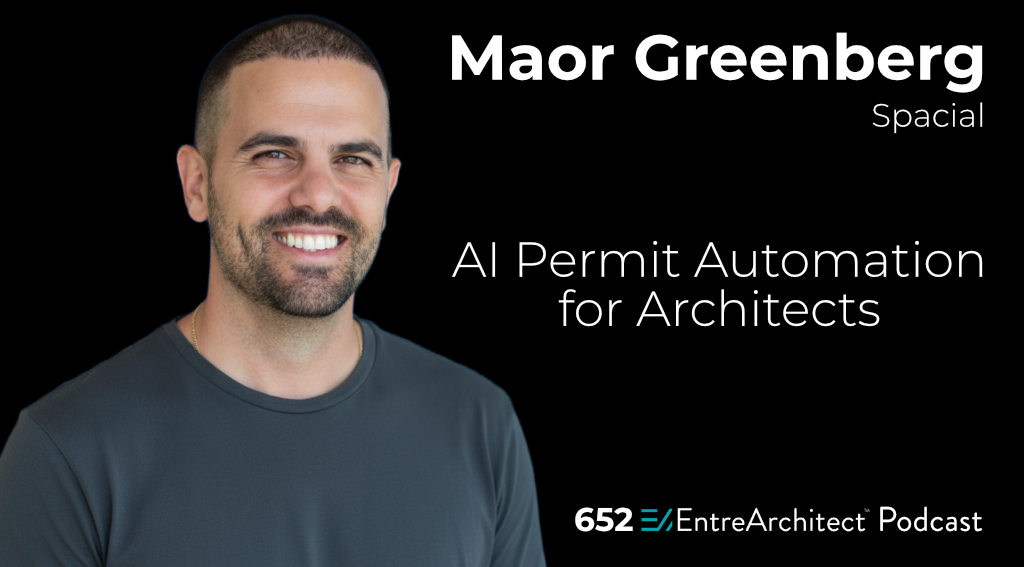
In my conversation with Maor Greenberg, founder of Spacial, we explored a growing reality that many architects feel but rarely articulate. The process of getting a project engineered and permitted is fundamentally broken. It is slow, fragmented, and filled with inefficiencies that drain both time and profitability from our firms.
What Maor is building is not simply another software tool. It represents a shift in how architects think about their role, how firms operate, and how value is delivered to clients. This conversation was not about technology alone. It was about the future of practice.
The Real Bottleneck Is Not Design
Architects are trained and wired to focus on design. It is where we feel most comfortable and where we believe we create the most value. But the reality is that design is rarely where projects break down. The real friction begins after the design is complete.
Engineering coordination, MEP integration, code compliance, permit documentation, and endless revisions are where projects stall. These phases are often disconnected, inconsistent, and heavily dependent on manual processes. Maor shared that engineering alone can consume dozens, sometimes hundreds, of hours on a single project.
When you step back and look at the full timeline, it becomes clear that the inefficiencies in this phase are not just operational issues. They are strategic liabilities. When you lose control of the process, you lose control of your schedule, your budget, and ultimately your client experience.
The opportunity for architects is not just to design better. It is to manage the entire process more effectively.
Speed Is the New Competitive Advantage
One of the most compelling ideas from this conversation is the concept of time as a competitive advantage. We often think about quality, creativity, or service as differentiators, but speed is becoming just as important.
Maor described a future where permit-ready documentation can be produced in days instead of months. That shift has enormous implications. It means faster approvals, quicker starts, and reduced carrying costs for clients. It also means fewer opportunities for errors and rework.
Time is not just a scheduling issue. It is a financial variable. Every delay adds cost, increases risk, and creates friction in the relationship between architect and client.
For small firm architects, this is a powerful insight. You do not need to outspend or outstaff larger firms. You can outmaneuver them by being faster, more responsive, and more efficient. Speed, when paired with quality, becomes a significant strategic advantage.
Automation Is an Upgrade, Not a Threat
There is understandable concern in the profession about the rise of artificial intelligence. Many architects worry about being replaced or losing control over the creative process. What this conversation made clear is that automation is not about replacement. It is about reallocation.
Automation handles the repetitive, predictable tasks that consume time but add little creative value. Humans remain responsible for judgment, decision-making, and design intent. In fact, by removing the burden of routine work, architects are freed to focus on the parts of the profession that matter most.
Imagine removing the majority of tedious documentation work from your workflow. That time can be reinvested into design, client communication, and leadership. Those are the areas where architects create real impact.
The firms that will succeed are not the ones that resist automation. They are the ones that learn how to use it effectively to enhance their capabilities.
Integration Is More Valuable Than More Tools
One of the biggest challenges facing firms today is the growing number of disconnected tools. Each platform solves a specific problem, but together they often create a fragmented workflow that is difficult to manage.
Design software, communication tools, project management systems, and engineering coordination platforms all operate independently. The result is a system that requires constant manual coordination and creates opportunities for errors.
Maor made an important point about point solutions. They are only as effective as the people using them, and when too many tools are involved, adoption becomes a challenge.
The real opportunity lies in integration. Instead of adding more tools, architects should be looking for systems that bring multiple functions together. The goal is not to collect software. The goal is to create a seamless flow of information from concept to construction.
When your systems are aligned, your team becomes more efficient, your process becomes more predictable, and your results improve.
Architects Must Reclaim Leadership
At its core, architecture is not just about design. It is about leadership. Architects are uniquely positioned to guide projects from concept through completion, coordinating multiple disciplines and managing complex decisions.
Too often, that leadership is diluted. When key components of the process are outsourced without integration, the architect becomes a coordinator rather than a leader. Responsibility remains, but control is diminished.
Maor emphasized that architects are not replaceable because they are the ones responsible for the entire project.
This is an important distinction. When architects take ownership of the process, they elevate their role and increase their value. They move from being service providers to being trusted advisors.
Reclaiming that leadership requires systems, processes, and tools that support integration and accountability. It also requires a mindset shift. Architects must see themselves as business leaders, not just designers.
Profitability Is Built Into the Process
Another key takeaway from this conversation is the opportunity for increased profitability. Many architects treat engineering and related services as pass-through costs. They manage them, but they do not benefit financially from them.
This approach undervalues the role of the architect. If you are responsible for coordinating and delivering these services, there is an opportunity to capture value.
By integrating services more effectively, architects can create new revenue streams and improve margins. This is not about charging more for the same work. It is about delivering a more comprehensive service and being compensated accordingly.
Profitability is not just about fees. It is about how your process is structured. When your process improves, your profitability follows.
The Client Has Already Evolved
Today’s clients are more informed, more engaged, and more empowered than ever before. With access to AI tools, they can generate ideas, analyze designs, and ask more complex questions.
This shift creates both opportunity and challenge. On one hand, clients are more invested in the process. On the other hand, they may request more iterations and challenge decisions more frequently.
Maor noted that clients are already using AI to evaluate designs and push for additional revisions.
This requires architects to adapt. Clear communication, defined processes, and structured decision-making become essential. The role of the architect evolves from designer to guide, helping clients navigate complexity and make informed decisions.
The more tools clients have, the more they need your expertise to interpret and apply that information effectively.
Build a Business, Not a Hobby
Perhaps the most important lesson from this conversation is the need for a mindset shift. Many architects approach their firms as extensions of their passion rather than as businesses.
Maor’s advice was direct. Stop treating your firm like a small business and start treating it like a real business.
This means focusing on systems, metrics, and performance. It means hiring strategically, investing in the right tools, and making decisions based on long-term goals rather than short-term convenience.
Architecture is a creative profession, but it is also a business. The firms that recognize this and act accordingly are the ones that will grow, scale, and thrive.
The Opportunity Ahead
What excites me most about this moment is not the technology itself, but what it makes possible. Faster processes, better coordination, and more predictable outcomes create a foundation for stronger businesses.
We are entering a new era of architectural practice. The tools are evolving, expectations are shifting, and opportunities are expanding. Architects who embrace these changes will not only survive but lead.
The question is not whether the industry will change. It already is.
The question is whether you will change with it.
If you want to explore these ideas further and hear the full conversation, listen to the complete episode at https://entrearchitect.com/652
Leave a Reply