What architects can learn from Disney, discipline, and intentional service design.
Most architects believe their work will speak for itself. Great design, clear drawings, and professional execution should be enough. In reality, clients rarely remember drawings. They remember how working with you felt.
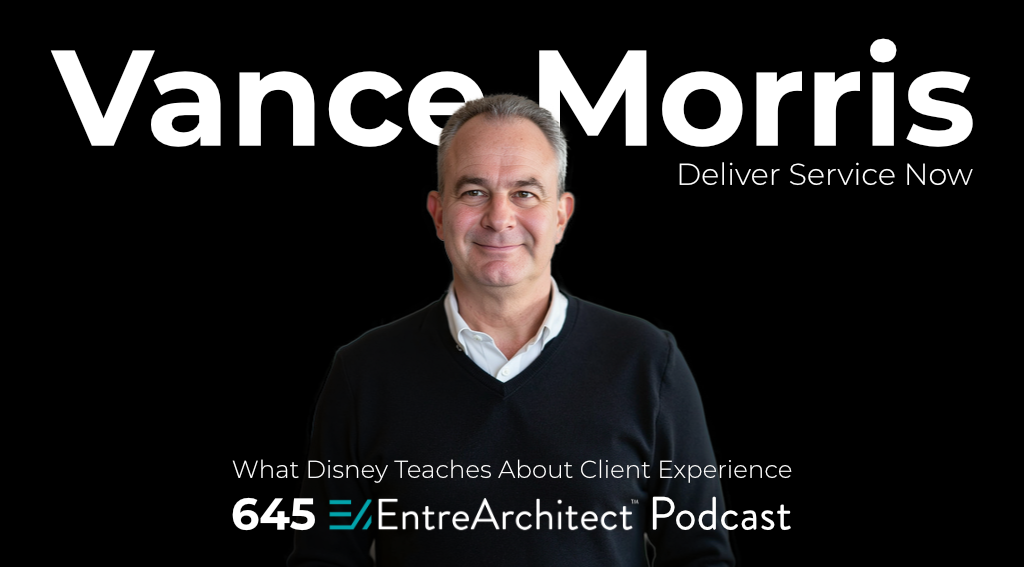
In my conversation with Vance Morris, we explored why long term business success has far less to do with clever marketing and far more to do with intentionally designed experiences. Vance’s career spans Disney, high profile hospitality leadership, bankruptcy, and the rebuilding of multiple profitable businesses. The common thread is simple and powerful. Experience drives loyalty. Loyalty drives growth.
This conversation is especially relevant for small firm architects who rely on reputation, repeat work, and referrals rather than volume advertising. What follows are the most important lessons architects can apply immediately.
Service Is Designed, Not Accidental
Vance’s first lesson came long before Disney. As a kid delivering newspapers, he learned that placing the paper exactly where the homeowner wanted it earned him more tips. That small insight became foundational. People reward service that feels personal and thoughtful.
At Disney, this lesson is taken to its extreme. Nothing is accidental. Every touchpoint is designed, tested, refined, and choreographed. The goal is not efficiency alone. The goal is an experience that feels seamless and memorable.
Architects often design incredible buildings while leaving the client experience to chance. Phone calls vary depending on who answers. Deliverables arrive by email without ceremony. Weeks go by with no communication while clients wait and worry.
Experience should be designed with the same care as the work itself.
Map the Client Journey From the Client’s Perspective
One of the most practical exercises Vance recommends is mapping the entire client journey. Not from the firm’s perspective, but from the client’s.
Every interaction becomes a step on the journey. The first phone call. The initial meeting. The proposal. The waiting period between meetings. Construction. Project closeout. Life after the project is complete.
When architects do this honestly, gaps become obvious. Long periods of silence. Confusing handoffs. Moments where the client feels uncertain or forgotten.
Waiting is part of the experience. Disney understands this. They coined the term “line entertainment”. Waiting is inevitable, but boredom and anxiety are optional.
If a client waits two weeks for drawings, what are they experiencing during that time. Are they reassured or second-guessing their decision? Experience design fills those gaps intentionally.
Retention Is Where Profit Lives
One of the most striking moments in the conversation was when Vance shared his numbers. It cost his business $145 to acquire a new customer. It cost only $22 per year to retain an existing one.
This math should change how architects think about business development.
Marketing gets attention. Experience creates loyalty. Loyalty creates repeat work and referrals at a fraction of the cost.
For architects, this means the project is not the end of the relationship. It is the beginning of long term value. Clients who feel cared for become ambassadors. They tell their friends. They advocate on your behalf. They come back.
Retention is not passive. It must be engineered.
Make the Ordinary Feel Intentional
Disney is famous for turning mundane activities into experiences. Answering the phone. Standing in line. Even using the restroom is thoughtfully considered.
Architects can do the same at every scale.
How is the phone answered. Does it sound like every other firm or does it reflect your personality. How are proposals delivered. A $50,000 design fee sent by email communicates something very different than a thoughtfully presented package delivered in person.
Vance shared examples of businesses that differentiate themselves through small, memorable gestures. Not expensive gestures. Intentional ones.
Experience is not about luxury. It is about care.
Construction Is a Critical Experience Moment
For architects, construction is where experience often breaks down. The drawings are done. The contractor takes over. The architect fades into the background.
This is a mistake.
From the client’s perspective, construction is when the dream becomes real. It is also when stress peaks. Architects who remain visibly engaged during construction reinforce trust and value.
Site walks become storytelling moments. Framing walkthroughs connect drawings to reality. Progress meetings reassure clients that their architect is still guiding the process.
If you are involved, be intentionally involved. If you are absent, the contractor defines the experience.
Create a Strong Closing Moment
Disney calls it the kiss good night. The final moment that overrides the fatigue, the lines, and the expense. Fireworks do this brilliantly.
Architects need their own version.
Final walkthroughs should feel ceremonial. Project closeout should feel complete, not abrupt. Some firms create printed project books documenting the journey from concept to completion. Others host final reveal moments that celebrate the work.
Clients remember endings more than middles. Design the ending.
Stay Top of Mind After the Project
One of Vance’s strongest recommendations is ongoing communication after the project ends. Not sales emails. Relationship communication.
Clients will forget you if you let them. That is not their fault.
Printed newsletters stand out because mailboxes are mostly empty. Handwritten notes feel personal. Occasional check ins show care without asking for anything.
Referrals do not happen by accident. They happen when you remain present in someone’s life.
Avoid Incongruence at All Costs
The biggest mistake businesses make when trying to improve experience is being incongruent. Claiming luxury while delivering shortcuts. Promising personalization while acting generic.
Clients forgive mistakes. They do not forgive dishonesty.
Your experience must match your positioning. If you present yourself as premium, every touchpoint must reinforce that claim.
Implementation Is the Difference Maker
Vance closed the conversation with a simple truth. Ideas do not change businesses. Implementation does.
Architects hear good ideas constantly. Podcasts. Conferences. Articles. Nothing changes until one idea is chosen and applied.
Pick one experience improvement. One touchpoint. One gap to fill. Implement it fully.
Then move to the next.
That is how businesses grow sustainably.
If you want to hear the full conversation with Vance Morris, including his Disney stories and practical examples, listen to Episode 645 at https://entrearchitect.com/645.
Leave a Reply